
Custom 3D Printer Filament Racks: Why Partnering with a Specialized Factory Matters for Your Brand
By admin
Mar 27, 2026
When a brand decides to launch a filament storage rack under their own name, the difference between a successful product and a frustrating one often comes down to one thing: who’s building it.
As a factory that specializes in metal display racks, we’ve seen both sides of this. We’ve worked with startups bringing their first product to market, and we’ve produced hundreds of thousands of units for established brands scaling their accessory lines. Over the years, we’ve learned that a successful custom rack project isn’t just about bending metal—it’s about understanding how the product will be used, how it will be shipped, and how it reflects the brand behind it.
Here’s how we approach custom OEM filament racks, from initial concept to finished product.
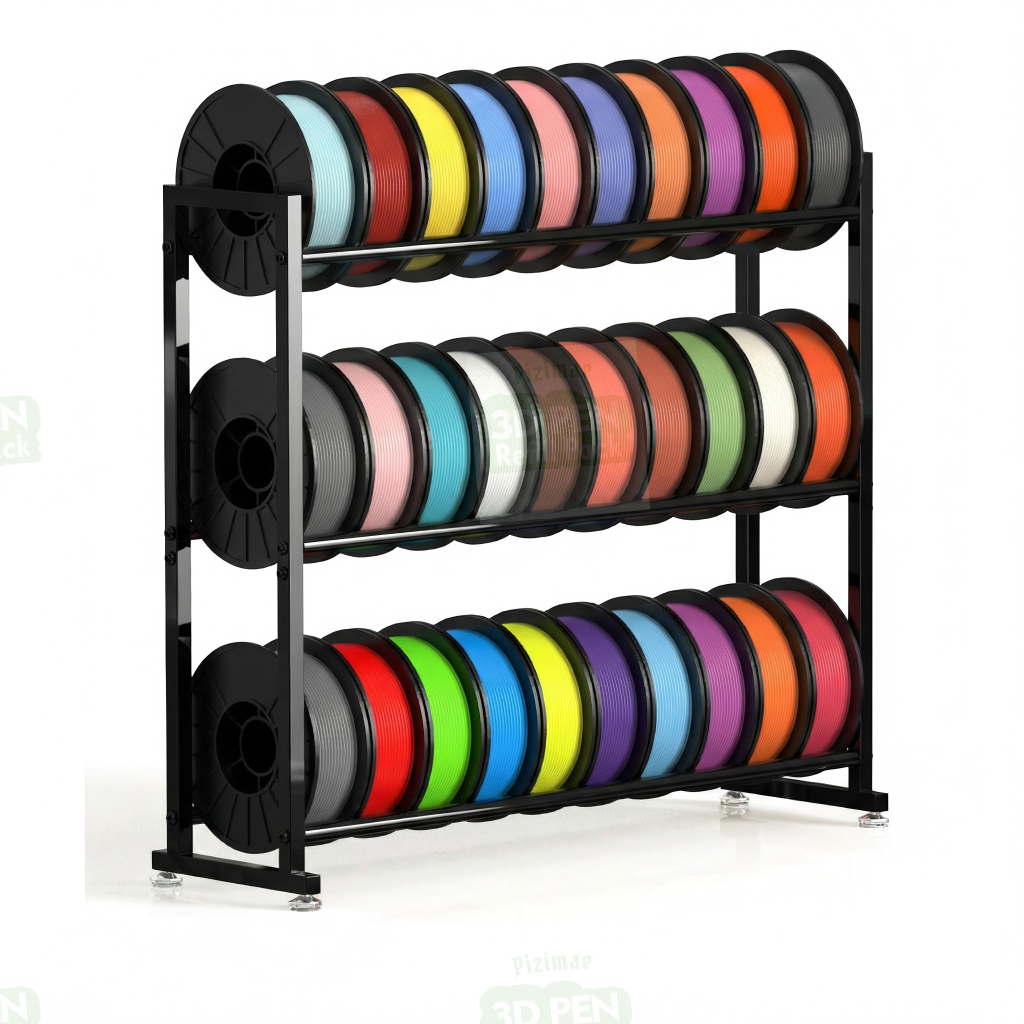
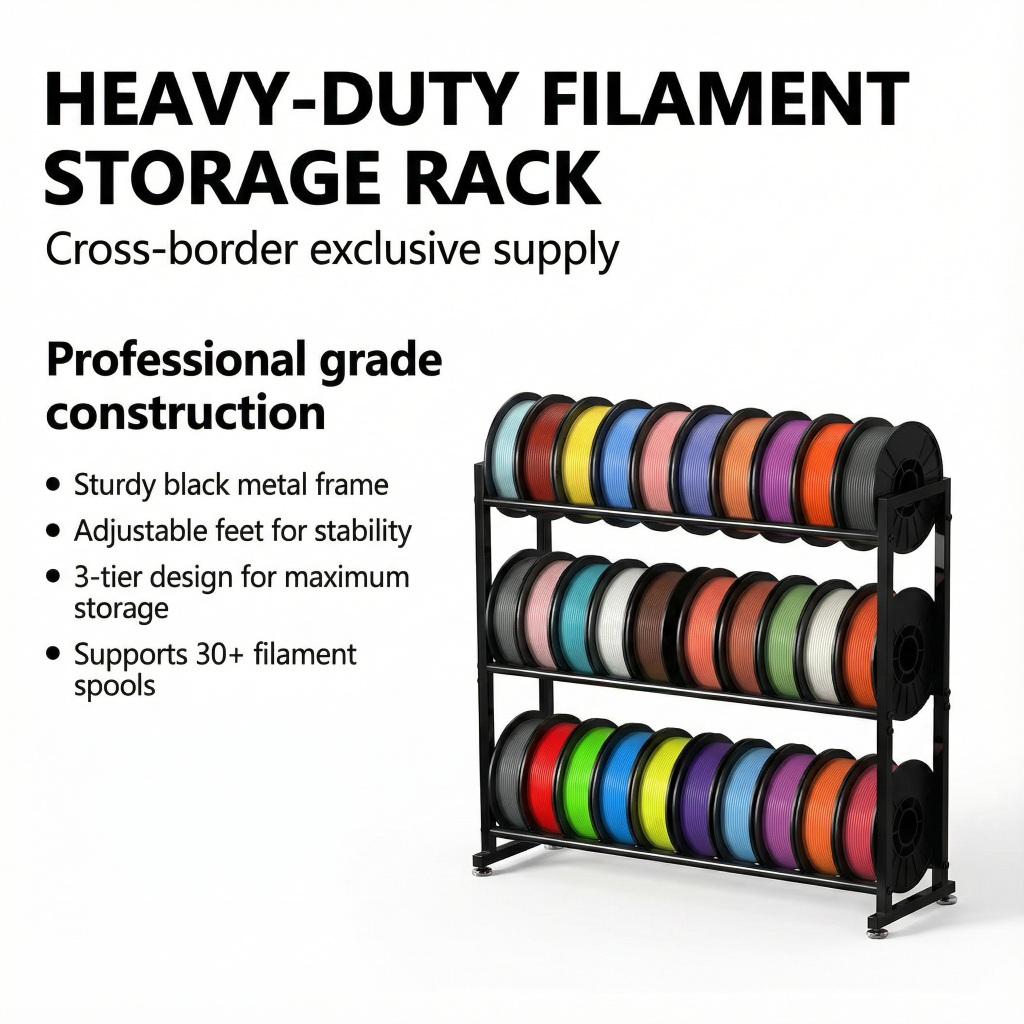
Why Brands Choose Custom Metal Racks
Off‑the‑shelf racks are fine for individual hobbyists. But for a business—whether you’re a filament manufacturer, a 3D printer reseller, or a retail chain—generic products don’t build brand recognition. A custom rack does a few things that standard racks can’t:
- Brand visibility – Your logo, your colors, your packaging. Every unit becomes a marketing touchpoint.
- Product differentiation – In a crowded market, a well‑designed custom rack stands out. It signals that you care about quality and presentation.
- Control over quality – When you work directly with a factory, you’re not relying on a third‑party supplier’s quality standards. You set them.
- Scalability – A custom solution can be designed with volume in mind, from packaging efficiency to stackability for warehouse storage.
Our Custom OEM Process
Every project starts with a conversation. But beyond that, we’ve built a process that keeps things clear, efficient, and predictable for our clients.
Step 1: Requirements & Concept
We begin by understanding your goals. What’s the target price point? What’s the estimated order volume? Will the rack be sold online, in retail stores, or both? What’s your timeline?
Some clients come in with detailed CAD files. Others come with a rough sketch or even just a photo of something they like. Both are fine. Our design team works with whatever you have to refine the concept into something manufacturable.
Step 2: Design & Engineering
This is where we turn ideas into production-ready specifications. We consider:
- Material gauge – Thicker metal for durability, lighter options for cost efficiency.
- Finish options – Powder coating in custom colors, electroplating, or raw metal finishes.
- Assembly method – Welded construction for maximum stability, or bolt‑together design for flat‑pack shipping.
- Surface treatment – Logo placement via silk screening, laser engraving, or embossing.
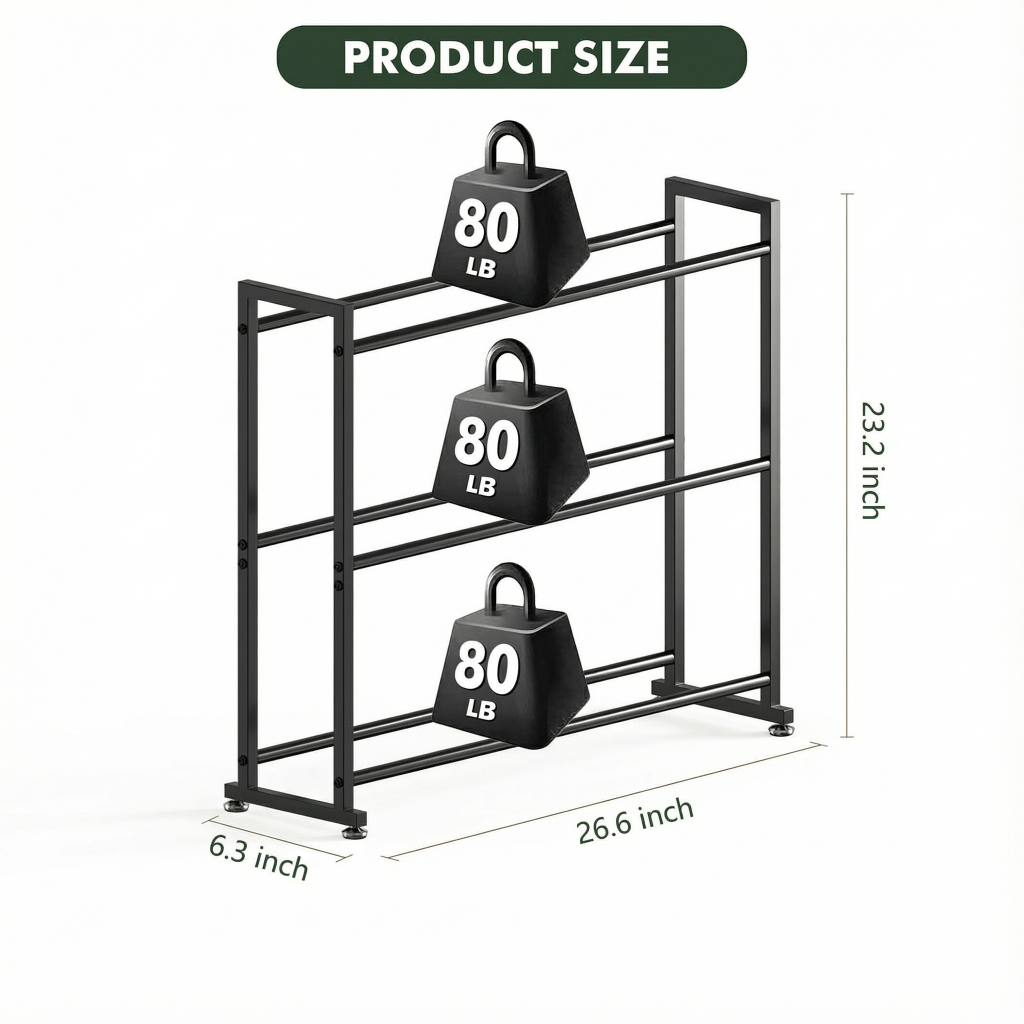
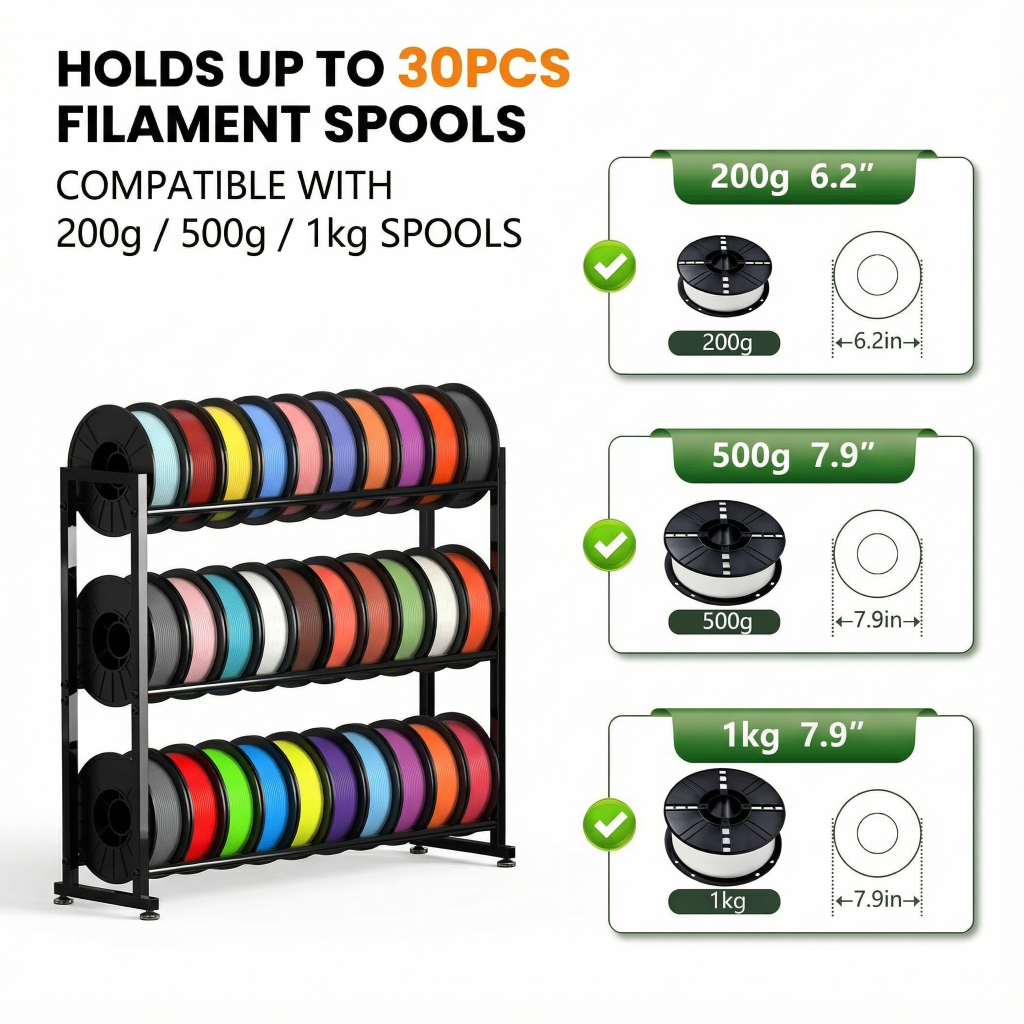
We also run structural assessments to ensure the rack will hold standard 1kg filament spools without sagging or tipping—something that matters a lot for customer satisfaction down the line.
Step 3: Sampling & Validation
Before moving to production, we build samples. This is a critical step because it gives you a physical product to test. You can check assembly time, stability, packaging fit, and overall appearance.
If adjustments are needed, we make them at this stage. We’ve learned over the years that getting the sample right saves everyone time and money later. Most clients go through one or two rounds of sampling before final approval.
Step 4: Mass Production
Once the sample is approved, we move to full production. Our facility is equipped with:
- Laser cutting machines for precision parts
- CNC bending equipment for consistent angles across all units
- Automated welding lines for structural integrity
- Powder coating lines with custom color matching
- Silk screening and laser marking stations for branding
Each batch goes through in‑process quality checks. We pull units at multiple stages—after cutting, after welding, after coating, and at final packaging—to catch any issues early.
Step 5: Packaging & Logistics
Packaging is often overlooked, but it matters, especially if your racks are going to retail shelves or e‑commerce fulfillment centers.
We offer:
- Custom branded boxes with your logo and product information
- Flat‑pack design to reduce shipping volume and freight costs
- Protective inserts to prevent scratches during transit
- Palletization according to your warehouse requirements
We also handle export documentation, container loading, and coordination with your freight forwarder. Whether you’re shipping to a local warehouse or across the ocean, we make sure the product arrives in good condition.
Manufacturing Capabilities
Because we focus exclusively on metal display racks and related products, our production lines are optimized for this category. Here’s what we work with regularly:
| Process | Details |
|---|---|
| Material | Cold‑rolled steel, stainless steel, aluminum |
| Thickness | 0.8mm to 2.0mm depending on application |
| Surface finish | Powder coating (any RAL color), electroplating, brushed finish |
| Branding | Laser engraving, silk screen printing, metal badges, adhesive labels |
| Structure | Welded frame or bolt‑together assembly |
| Capacity | 3‑tier, 4‑tier, 5‑tier, or custom configurations |
| Spool compatibility | Designed for standard 1kg spools (diameter 200mm / 8 inches) |
We also offer stackable designs so retailers and end users can expand their storage as their filament collection grows—a feature that adds value without increasing your production cost significantly.
Common Customization Requests
Over the years, we’ve seen a few patterns in what brands ask for. Here are the most common customizations:
Logo Placement
Some brands want a small, subtle logo on the front crossbar. Others prefer larger branding on the side panels. Laser engraving gives a clean, permanent finish that holds up over time.
Color Matching
If your brand uses specific Pantone or RAL colors, we can match them with our powder coating. This is especially popular for retail‑facing products where visual consistency matters.
Adjustable Shelf Height
For brands targeting professional users with larger spools or multiple spool sizes, adjustable shelves add flexibility. It’s a more complex design but can be a strong selling point.
Packaging Design
We’ve helped clients design packaging that reduces shipping costs while still looking good on a retail shelf. Flat‑pack boxes with foam inserts, step‑by‑step assembly instructions, and branded exterior graphics are all options.
MOQ Flexibility
We understand that not every brand starts with a container‑sized order. We work with clients at different scales. For first‑time custom projects, we typically recommend a pilot run to validate the market before scaling up.
Quality Control
One question we hear often is: how do we ensure consistency across thousands of units?
Our approach is systematic:
- Raw material inspection – Steel arrives with certification, and we verify thickness and finish before production begins.
- In‑process checks – Operators and QC staff inspect at each stage: cutting, bending, welding, coating, and assembly.
- Final inspection – Every unit is checked for surface quality, structural integrity, and packaging accuracy before being released.
- Pre‑shipment testing – For new designs, we run drop tests, weight tests, and assembly tests to simulate real‑world use.
If a client requests third‑party inspection (such as SGS or BV), we coordinate that as well.
Why Partner with a Specialized Factory
There are plenty of factories that can bend metal. What sets a specialized display rack factory apart is the accumulated knowledge of how these products are used, stored, and sold.
We know, for example, that:
- A rack that’s easy to assemble leads to fewer customer support calls
- Flat‑pack design saves freight costs without compromising stability
- Powder coating with a textured finish hides minor scratches better than gloss
- Slightly taller feet allow the rack to sit level on uneven workshop floors
These are small details, but they add up to a product that performs well in the market and reflects positively on your brand.
Getting Started
If you’re considering a custom filament rack for your brand, here’s how we typically start:
- Share your requirements – target price, estimated quantity, timeline, any reference images
- We provide a quote and timeline – based on material, finish, packaging, and complexity
- Sample development – CAD drawings first, then physical sample for approval
- Production scheduling – lead times vary by order size, typically 25–45 days for initial orders
- Ongoing supply – for repeat orders, we hold tooling and maintain consistent quality
We’ve worked with brands across the 3D printing industry, from filament companies to printer manufacturers to online retailers. Whether you’re launching your first accessory or scaling an existing product line, we’re set up to help you do it efficiently.
A clean, organized workspace starts with good storage. And for brands that want to offer that solution under their own name, having the right manufacturing partner makes all the difference.
Previous Article
How to Choose Corrugated Display Stands for Umbrellas
Next Article
Display Stand Manufacturers Near the 2026 Canton Fair: Introducing Modernty with 25 Years of Expertise
Trusted by These Featured Clients