

Display Stands for Electronics in Retail Shops: How to Enhance Your Store’s Visual Appeal and Boost Sales
By admin
Dec 02, 2025
When it comes to retail, how you display your electronics is just as important as the products themselves. Electronics are often high-value items, and customers want to be able to touch, feel, and understand the features of a product before they commit to buying it. That’s where display stands for electronics in retail shops come in. Not only do display stands help organize products, but they also make the shopping experience more engaging and interactive, which can ultimately lead to higher sales.
In this article, we’ll take a deep dive into the different types of display stands for electronics, their benefits, and how to choose the right one for your store. Plus, we’ll answer some frequently asked questions (FAQs) to help guide your decision-making process.
Why Display Stands Matter for Electronics Retail
A display stand for electronics is much more than just a place to put your products. It serves several key purposes that can impact the success of your retail store:
- Product Visibility: A well-positioned display stand ensures that your products are visible and easy to access. This increases the chances that customers will notice your items and consider purchasing them.
- Customer Interaction: Many electronic products, such as smartphones, tablets, and headphones, require hands-on interaction to make a purchase decision. A good display stand facilitates this by allowing customers to test and try out products, making the shopping experience more engaging.
- Organized Shopping Experience: A neat and organized display helps customers easily browse through your offerings without feeling overwhelmed. This can improve the overall shopping experience and encourage more spending.
- Branding and Aesthetics: Display stands reflect the style and quality of your brand. Whether you use modern, sleek stands for high-end gadgets or more robust, practical displays for everyday electronics, the right display stand can strengthen your brand image and create a professional atmosphere that builds trust with customers.
- Encourages Impulse Buying: Attractive displays near checkout counters or high-traffic areas can encourage impulse buying. Customers are more likely to pick up additional accessories or smaller electronics when they’re well presented.
Types of Display Stands for Electronics in Retail Shops
Choosing the right display stand for electronics depends on several factors, such as the type of product, your store layout, and customer behavior. Here are the most common types of display stands used for electronics:
1. Free-Standing Display Stands
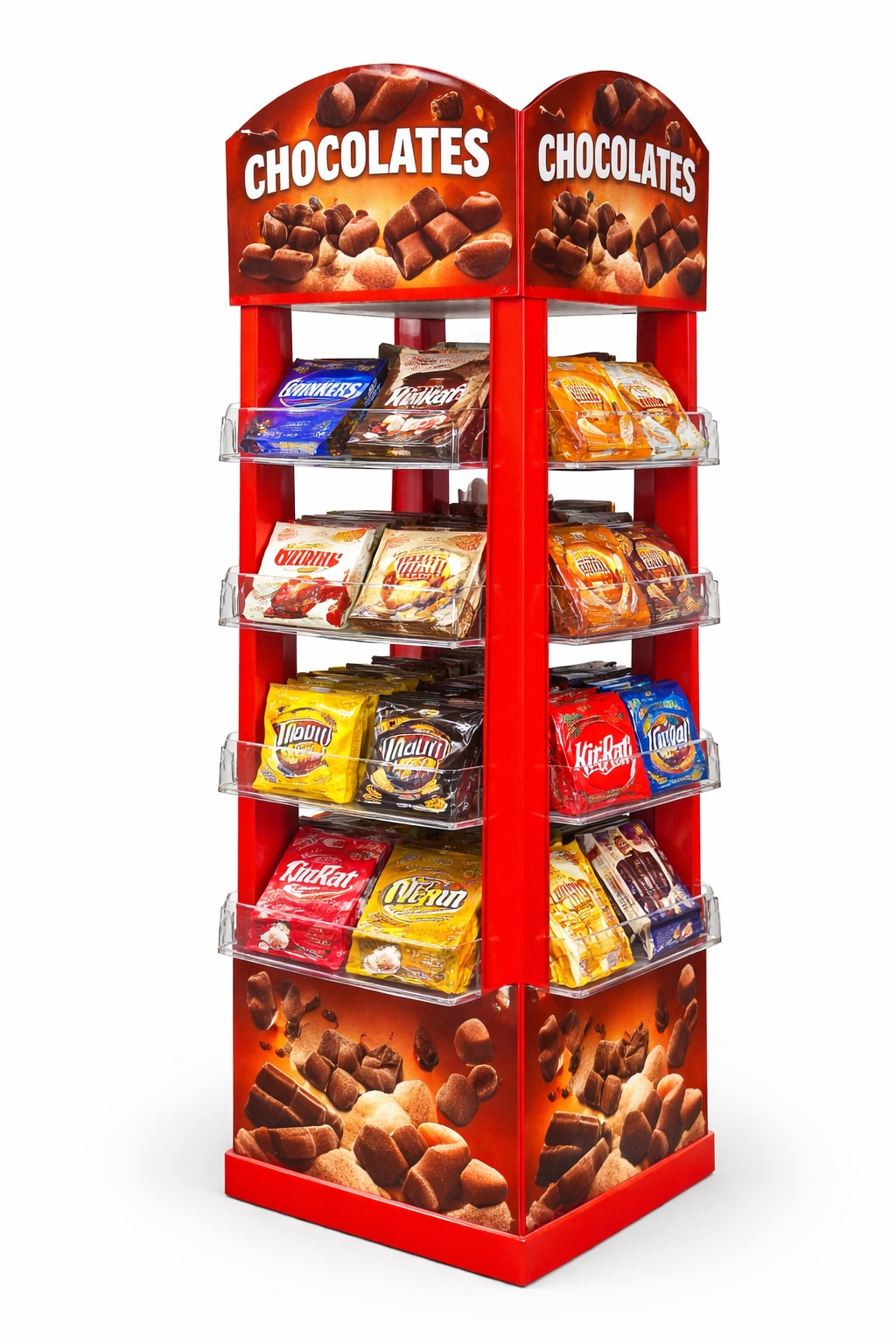
Free-standing display stands are versatile, portable, and can be placed anywhere within the store. These displays are typically large and come with hooks, shelves, or slots to organize products. They are perfect for high-visibility areas, such as near entrances, in aisles, or in the middle of the store.
- Advantages: High visibility, flexible placement, can showcase a wide variety of products.
- Best For: Smartphones, tablets, accessories, or seasonal promotions.
Example: A free-standing display near the entrance with several rows of mobile phones, tablet stands, and related accessories. Integrated lighting helps highlight the products, making them more noticeable.
2. Wall-Mounted Display Stands
Wall-mounted displays are great for saving floor space while still offering excellent product visibility. These stands are typically used for smaller products like headphones, smartwatches, chargers, or other accessories. Wall-mounted displays can be designed with hooks, shelves, or panels to keep products organized and easily accessible.
- Advantages: Space-saving, aesthetically clean, and can be used to create a more streamlined, modern look.
- Best For: Small electronics, accessories, and items that require frequent stock replenishment.
Example: A sleek, modern wall-mounted display holding several different models of wireless earbuds, with pricing and product specifications visible on each shelf.
3. Tabletop Display Stands
Tabletop stands are usually placed on counters or tables and are ideal for showcasing smaller electronic products like phone cases, portable speakers, or charging cables. These displays are easy to set up and allow customers to interact with products directly.
- Advantages: Great for impulse buys, compact, easy to access, and often placed near checkout counters.
- Best For: Small gadgets, phone accessories, and promotional items.
Example: A rotating display on the checkout counter holding various phone accessories like cases, chargers, and portable power banks, designed to catch customers’ attention during checkout.
4. Interactive Display Kiosks
Interactive kiosks are digital display stands that allow customers to engage with products through touchscreen interfaces or interactive features. These kiosks are ideal for electronics that have complex features, such as smartphones, cameras, or VR headsets. Customers can explore detailed product information, view videos, and even compare different models before making a decision.
- Advantages: Enhances customer engagement, provides detailed information, can allow for purchases to be made directly from the kiosk.
- Best For: Flagship products, high-tech electronics, and items with complex features.
Example: A large, touchscreen kiosk in the middle of your store where customers can learn about the latest smartphone models, watch demo videos, and compare prices and specifications.
5. Rotating Display Stands
Rotating display stands offer a dynamic way to showcase your products. These stands rotate automatically, providing customers with a full 360-degree view of the product. Rotating stands are particularly popular for premium items like headphones, cameras, and wearables.
- Advantages: Provides a comprehensive product view, adds a dynamic element to the display, and encourages customer interaction.
- Best For: High-end products, premium gadgets, and small electronics that benefit from a full view.
Example: A rotating display stand showcasing a range of premium wireless headphones, allowing customers to get a clear view of all the different models.
How to Choose the Best Display Stand for Your Electronics Store
Selecting the right display stand for electronics involves considering several factors:
- Product Size and Type: Larger items like laptops and TVs need floor-standing units, while smaller items like headphones and chargers are better suited for tabletop or wall-mounted displays.
- Store Layout: Take into account the available floor space and foot traffic in your store. Free-standing displays work well in high-traffic areas, while wall-mounted displays save space and help organize smaller products.
- Branding and Design: Ensure the display stand matches your store’s design aesthetic and brand image. High-end electronics may require sleek, modern displays, while more utilitarian products might work best on practical, sturdy stands.
- Customer Interaction: Choose displays that allow customers to easily engage with the products. Interactive kiosks, rotating displays, and hands-on product setups increase the likelihood that customers will try out the product and make a purchase.
- Lighting and Signage: Make sure your display stands incorporate lighting and clear signage. Well-lit displays highlight the products and attract attention, while signage helps customers understand the product’s features, prices, and promotions.
FAQs About Display Stands for Electronics in Retail Shops
1. Why do I need display stands for electronics in my retail shop?
Display stands enhance product visibility, encourage customer interaction, and help organize your store. They also create a more engaging shopping experience, which can lead to increased sales and customer satisfaction.
2. How do I choose the right display stand for my electronics?
The right display stand depends on the size and type of the electronics, your store layout, and your branding. Consider whether you need a free-standing display for high-traffic areas, a wall-mounted stand for space-saving, or a rotating stand for showcasing premium items.
3. Can I customize my display stands?
Yes, many suppliers offer customizable display stands that align with your brand’s aesthetic. You can choose colors, materials, and designs that match your store’s overall look.
4. How do I ensure my displays are engaging for customers?
Incorporate interactive elements like touchscreen kiosks, rotating stands, or product demo stations. Additionally, use clear signage and lighting to draw attention to the products and provide essential information.
5. Are display stands for electronics expensive?
The cost of display stands can vary greatly depending on the type, size, and customization. While simple tabletop stands are more affordable, high-tech options like interactive kiosks or rotating displays tend to be more expensive.
6. How often should I update my display stands?
It’s a good idea to update your display stands regularly to reflect new products, seasonal promotions, or sales events. Regular updates keep your store fresh and encourage customers to return.
Conclusion
Choosing the right display stand for electronics in your retail shop is crucial for creating an engaging and visually appealing shopping environment. By investing in the right stands, you can improve product visibility, increase customer interaction, and ultimately drive sales. Whether you’re displaying smartphones, laptops, or accessories, the right display stand will enhance the customer experience and help your store stand out in a competitive market.
With various options to choose from, including free-standing, wall-mounted, and interactive displays, retailers have a wide range of choices to fit their store’s unique needs and product types. Focus on choosing display stands that allow for easy interaction, align with your branding, and create an organized and inviting environment for customers.
Previous Article
The Complete Guide to Tobacco & Vape Vending Machines in 2025

Next Article
How to Create a Custom LEGO Display Stand: A Comprehensive Guide

Trusted by These Featured Clients